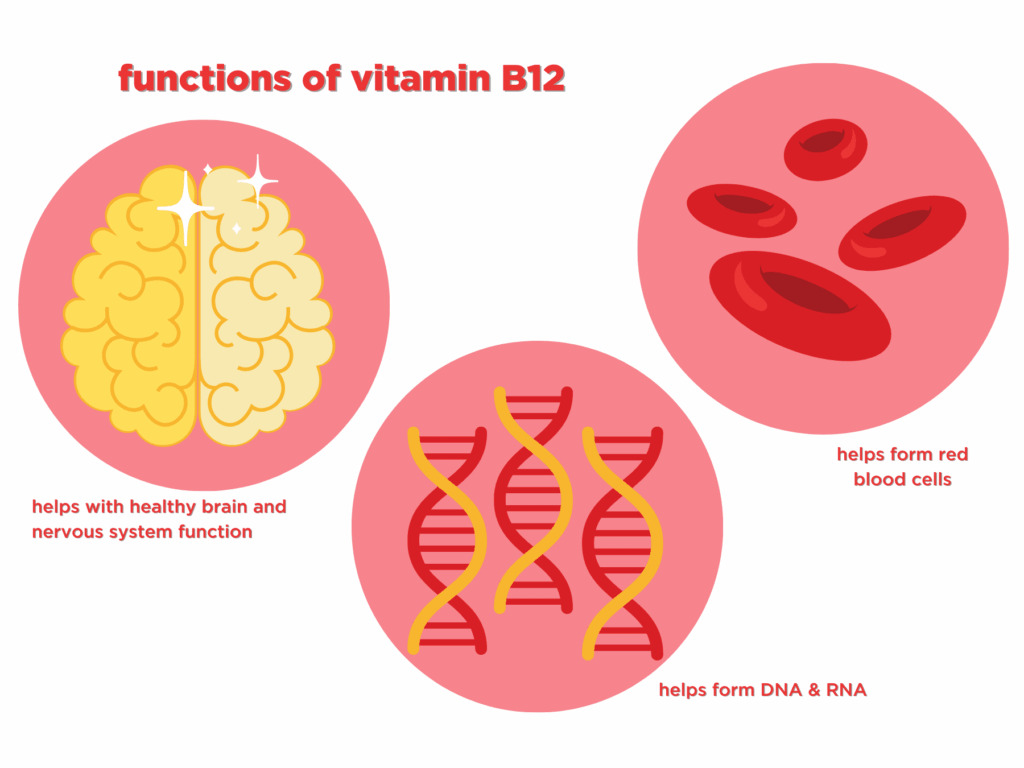
Insufficient intake of vitamin B12 can result in serious health consequences, including anemia and damage to the nervous system.
For people following a vegan lifestyle, the only dependable sources of vitamin B12 are B12 supplements and foods that have been fortified with vitamin B12. Regardless of whether vitamin B12 is found in supplements, fortified foods, or animal products, its original source is micro-organisms.
Most vegans consume enough vitamin B12 to prevent severe deficiency conditions such as anemia and neurological damage. However, some individuals may not obtain enough to reduce potential risks associated with elevated homocysteine levels, including cardiovascular disease and pregnancy-related complications. As stated in the Medical Journal of Australia, vegans should ensure adequate intake of vitamin B12 through fortified foods or supplementation.
To maximize the health benefits of a vegan diet, individuals should follow one of the following approaches:
- Take a daily vitamin B12 supplement containing at least 10 micrograms (μg or mcg).
- Take a weekly vitamin B12 supplement providing at least 2000 micrograms.
- Consume fortified foods two or three times per day in amounts that provide a minimum of 3 micrograms of vitamin B12 daily.
Obtaining sufficient vitamin B12 exclusively from fortified foods can sometimes be challenging. Many people find supplements to be a safer, more convenient, and more cost-effective option. Those relying on fortified foods should carefully read product labels to verify that their daily intake is adequate.
For example, if a fortified plant-based milk contains 1 microgram of vitamin B12 per serving, consuming three servings throughout the day would provide an appropriate amount. In Australia, foods commonly fortified with vitamin B12 include certain soy milks, yeast-based spreads, and plant-based meat alternatives such as soy burgers and sausages.
The frequency of vitamin B12 consumption affects the amount required. Because vitamin B12 is absorbed most efficiently in small quantities, larger doses are necessary when consumed less often. The recommendations above are specifically designed to account for this absorption pattern. Exceeding the suggested amounts or combining multiple approaches is generally not harmful.
Share Reliable Information to Support Vegan Health
If this is the only information you read about vitamin B12, you already know the essential facts. However, for those who would like a deeper understanding, the following sections provide additional detail.
This guidance was originally prepared by Stephen Walsh, a trustee of the UK Vegan Society, together with members of the International Vegetarian Union Science Group (IVU-SCI) in October 2001. The material may be reproduced freely provided it remains complete and unaltered.
Vitamin B12 and Vegan Diets: Lessons Learned from Experience
Vitamin B12 is a unique nutrient. It is required in smaller quantities than any other known vitamin. Approximately ten micrograms distributed throughout the day appears to provide the maximum amount that the body can effectively utilize.
When no obvious dietary source of vitamin B12 is available, deficiency symptoms often take five years or more to appear in adults. However, some individuals may develop symptoms within a year. Conversely, a small number of people without any clearly identifiable source of vitamin B12 appear to avoid clinical deficiency for twenty years or longer.
Vitamin B12 is the only vitamin that cannot reliably be obtained from a varied whole-food plant-based diet, even one rich in fruits, vegetables, and sunlight exposure.
Many herbivorous animals, including cattle and sheep, absorb vitamin B12 produced by bacteria within their digestive systems. Small amounts of vitamin B12 may also be present in soil and on plants. These observations have led some vegans to conclude that vitamin B12 requires no special attention or that concerns regarding deficiency are exaggerated.
Others have suggested that foods such as spirulina, nori, tempeh, or barley grass provide adequate non-animal sources of vitamin B12. Unfortunately, these claims have not been supported by long-term evidence.
More than sixty years of practical experience with vegan diets has demonstrated that only vitamin B12-fortified foods and vitamin B12 supplements consistently provide reliable protection against deficiency and support optimal health.
For this reason, every vegan should ensure an adequate intake of vitamin B12 through fortified foods, supplements, or both. Doing so not only protects personal health but also strengthens the credibility of veganism by setting a positive example.
Achieving Adequate Vitamin B12 Intake
Recommended vitamin B12 intakes vary considerably between countries.
In the United States, the recommended daily intake is 2.4 micrograms for adults and 2.8 micrograms for breastfeeding mothers. In Germany, the recommended intake is 3 micrograms per day.
These recommendations generally assume approximately 50 percent absorption, which is typical when small quantities of vitamin B12 are consumed from food sources.
To meet these recommendations, individuals need to absorb approximately 1.5 micrograms of vitamin B12 daily. This amount appears sufficient to prevent even the earliest indicators of inadequate vitamin B12 status, including elevated homocysteine and methylmalonic acid (MMA) levels.
Even slight elevations in homocysteine have been linked to increased risks of numerous health conditions, including cardiovascular disease, pregnancy complications such as preeclampsia, and neural tube defects in infants.
Fortunately, obtaining adequate vitamin B12 is straightforward, and several options are available to suit different lifestyles and preferences.
Vitamin B12 absorption decreases as intake amounts increase. Approximately 50 percent may be absorbed from doses of around 1 microgram, whereas only about 0.5 percent may be absorbed from doses of 1000 micrograms or more.
Consequently, the less frequently vitamin B12 is consumed, the larger the total dose must be.
Consuming fortified foods that provide approximately 1 microgram of vitamin B12 three separate times each day, spaced several hours apart, can provide adequate intake.
Because fortified food availability and vitamin B12 content vary between countries and brands, maintaining sufficient intake through food alone requires careful planning and label reading.
A daily supplement containing at least 10 micrograms of vitamin B12 provides a similar amount of absorbed vitamin B12 as consuming 1 microgram three times daily from food sources.
For many people, supplementation may represent the simplest and most economical option.
Taking a single weekly supplement containing 2000 micrograms of vitamin B12 can also provide adequate intake.
To improve absorption, vitamin B12 tablets should ideally be chewed or allowed to dissolve slowly in the mouth. Supplements should be stored in opaque containers to protect their stability.
As with all supplements, it is sensible not to exceed the amount required for maximum benefit. Although toxicity from high vitamin B12 intakes has not been demonstrated, weekly intakes above 5000 micrograms are generally unnecessary.
All three approaches described above are suitable for most individuals with normal vitamin B12 metabolism.
People with impaired absorption may find the weekly 2000-microgram method particularly effective because it does not depend heavily on normal intrinsic factor function in the digestive system.
Rare metabolic disorders affecting vitamin B12 utilization may require entirely different treatment strategies. Anyone who suspects an underlying health issue should seek professional medical advice promptly.
Symptoms of Vitamin B12 Deficiency
Clinical vitamin B12 deficiency can lead to anemia and neurological damage.
Most vegans consume enough vitamin B12 to avoid severe deficiency. However, two groups are particularly vulnerable:
- Long-term vegans who avoid both fortified foods and supplements, including some raw-food and macrobiotic vegans.
- Breastfed infants whose mothers have inadequate vitamin B12 intake.
In adults, common symptoms of deficiency may include:
- Fatigue and loss of energy
- Tingling sensations
- Numbness
- Reduced sensitivity to pain or pressure
- Blurred vision
- Difficulty walking normally
- A sore or inflamed tongue
- Memory problems
- Confusion
- Hallucinations
- Personality changes
These symptoms often develop gradually over several months or even a year and are usually reversible when vitamin B12 deficiency is correctly identified and treated.
However, there is no single symptom pattern that reliably identifies deficiency, and permanent neurological damage has occurred in some untreated cases.
Anyone experiencing these symptoms should seek professional medical evaluation, as many conditions other than vitamin B12 deficiency can produce similar signs.
Infants often develop symptoms much more rapidly than adults.
Vitamin B12 deficiency in infants can result in loss of appetite, poor growth, lethargy, and developmental problems. If left untreated, it may progress to coma or death.
Infants are also more susceptible to permanent neurological damage than adults. Although some recover completely following treatment, others may experience lasting developmental delays.
The existence of these risks alone highlights the importance of consistently communicating the significance of vitamin B12 within the vegan community. Every case of vitamin B12 deficiency in a vegan child or uninformed adult is a preventable tragedy that can also damage public perceptions of veganism.
The Homocysteine Connection
The discussion does not end with the prevention of clinical deficiency.
Many vegans maintain vitamin B12 levels sufficient to prevent obvious deficiency symptoms but still exhibit reduced activity of vitamin B12-dependent enzymes. This often results in elevated homocysteine concentrations.
Research accumulated over recent decades strongly suggests that even mildly elevated homocysteine levels increase the risk of heart disease, stroke, and pregnancy complications.
Homocysteine levels are influenced by several nutrients, particularly folate.
Vegans generally consume abundant folate, especially when eating large quantities of leafy green vegetables. Nevertheless, repeated studies showing elevated homocysteine levels among vegans and vegetarians clearly indicate that vitamin B12 intake must also be adequate to eliminate unnecessary health risks.
Testing Vitamin B12 Status
Measuring blood vitamin B12 levels alone is often an unreliable way to assess vitamin B12 status in vegans.
Certain algae and plant foods contain vitamin B12 analogues, sometimes called “false B12,” which can appear as vitamin B12 in blood tests while interfering with normal vitamin B12 metabolism.
Standard blood counts can also be misleading because high folate intake may mask the anemia typically associated with deficiency.
Testing homocysteine levels provides a more useful indicator, with levels below 10 micromoles per liter generally considered desirable.
The most specific assessment is methylmalonic acid (MMA) testing.
Normal MMA values include:
- Blood MMA below 370 nmol/L
- Urine MMA below 4 mcg/mg creatinine
Values within these ranges indicate sufficient vitamin B12 availability.
Unfortunately, many healthcare providers still rely solely on blood vitamin B12 levels and blood counts, which may not adequately detect deficiency, especially in vegans.
Is There a Vegan Alternative to Fortified Foods and Supplements?
Individuals who choose not to consume fortified foods or supplements should understand that they are effectively conducting an experiment on their own health.
Many people have attempted this approach, but the long-term success rate has consistently been poor.
Adults who are not pregnant, not breastfeeding, and not planning pregnancy may decide to test alternative vitamin B12 sources, provided they carefully monitor their vitamin B12 status.
Annual testing of homocysteine and MMA levels is strongly recommended.
If either marker becomes elevated, continuing such an experiment may place health at risk.
For pregnant individuals, those planning pregnancy, breastfeeding mothers, or children, experimenting with unproven vitamin B12 sources is not justified.
Studies involving vegans have demonstrated that numerous proposed sources—including human intestinal bacteria, spirulina, dried nori, barley grass, and most seaweeds—do not reliably provide adequate vitamin B12.
Simply detecting vitamin B12 in a food is not sufficient evidence that the food can serve as a dependable source. True vitamin B12 must be distinguished from inactive analogues that may interfere with metabolism.
The ultimate test of any proposed vitamin B12 source is simple: does it consistently prevent and correct deficiency? Any claim regarding a food source should be supported by evidence demonstrating this outcome.
A Natural, Healthy, and Compassionate Diet
A truly healthy dietary pattern should support not only individual well-being but also the ability of humanity to thrive sustainably alongside the countless species that share our planet.
From this perspective, a well-planned vegan diet may represent the most appropriate dietary adaptation for many, and perhaps all, people living in the modern world.
There is nothing natural about modern industrial animal agriculture, which treats living, feeling beings as production units within a mechanized system.
When vegans obtain vitamin B12 through fortified foods or supplements, they are sourcing it from the same origin as all animals do—micro-organisms—without contributing to animal suffering or environmental degradation.
Vegans who consistently use adequate amounts of fortified foods or supplements are often less likely to develop vitamin B12 deficiency than many typical meat-eaters.
The Institute of Medicine highlighted this point when establishing vitamin B12 recommendations in the United States:
“Because 10 to 30 percent of older people may be unable to absorb naturally occurring vitamin B12, it is advisable for those older than 50 years to meet their RDA mainly by consuming foods fortified with vitamin B12 or a vitamin B12-containing supplement.”
Vegans can benefit from following this advice decades earlier, improving both their own health and the welfare of animals.
For informed vegans who consistently obtain adequate vitamin B12, deficiency should never become a problem.