Do you want to reduce your meat consumption but feel uncertain about making the transition?
Perhaps you are considering becoming vegan or shifting toward a mostly plant-based diet. Or maybe you have become aware of the health benefits of eliminating red meat and are thinking of starting there.
I personally needed two attempts before successfully becoming vegetarian. The first time, I made no plan at all—I simply stopped eating meat abruptly, “cold turkey,” so to speak. (Pun intended.)
That approach lasted about a week before I returned to eating meat.
The second attempt was successful. I remained vegetarian for several years before eventually transitioning to veganism, which also took two attempts.
During that second, successful attempt, I took a more structured and gradual approach.
In the end, my transition away from meat came down to seven key steps, which I now share, along with a first action to help you begin.
1. Commit to Eating Less Meat
This may sound simple…
However, one thing is certain: there will be situations where your new eating habits feel inconvenient—social gatherings, travel, dinners with friends, or eating out.
To navigate these moments successfully, strong commitment is essential.
Your first action:
Tell people around you.
Announce it on social media, write about it, or stock up on foods that support your new eating pattern at a health store.
Why do this?
Because people generally dislike embarrassment. If you publicly commit and then break that commitment, you will have to acknowledge it, which increases accountability.
2. Connect It to Another Meaningful Goal
When I first became vegetarian, it wasn’t primarily about ethics or animal welfare. It was about increasing my energy levels and improving my chances of qualifying for the Boston Marathon.
Becoming vegetarian became part of my training plan. That is what made it sustainable—I was more committed to the marathon goal than anything else, and removing meat became the strategy that supported it.
Your first action:
Identify a goal that matters even more to you than simply “becoming vegan” or “going vegetarian.”
This might include:
- Losing weight
- Building muscle
- Improving blood test results
- Protecting animals
- Reducing environmental impact
The key idea is simple: when your motivation extends beyond diet alone, adherence becomes much easier.
3. Start Small
One of the biggest fears is the idea that you will “never be able to eat certain foods again.” However, a dietary transition does not need to feel permanent from the beginning.
A useful strategy is starting with a short challenge, such as 10 days without meat.
Almost anything feels manageable for 10 days.
After that period, you may notice changes such as increased energy or weight loss. Then you can reassess and extend the challenge to 30 days. If you reach that point, continuing often becomes easier than returning to old habits.
Your first action:
Try a structured challenge such as a 10-day meat-free trial or a “plant-based before evening” approach.
Alternatively, begin with something simple like Meatless Mondays.
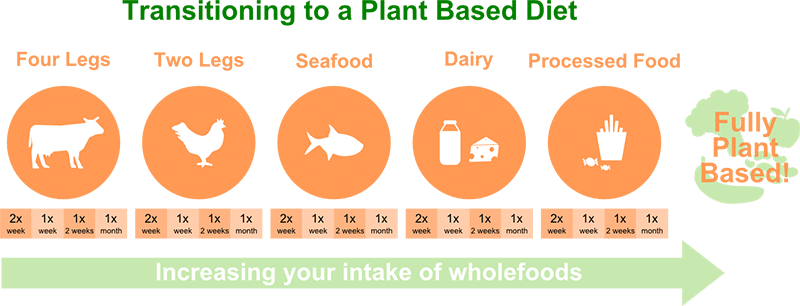
4. Gradually Reduce Meat Intake
For some people, a sudden change works best. For others, a gradual reduction is more sustainable.
In my case, phasing out meat slowly helped my preferences adjust over time.
Initially, I stopped eating red meat and pork for about a year. Later, I eliminated poultry and shifted toward a pescetarian diet that included fish and plant-based foods. Eventually, concerns about animal welfare led me to reduce fish intake as well, until I became fully vegetarian and later vegan.
Different approaches work for different people—gradual reduction is simply one option.
Your first action:
Start by limiting red meat and larger animals to once or twice per week. Maintain this pattern for several weeks.
Then gradually reduce poultry intake.
From there, continue step by step until you transition toward fish, then plant-based meals, and eventually a fully meat-free diet if that is your goal.
5. Plan Your Meals
As the saying goes, “If you fail to plan, you plan to fail.”
Removing meat without replacing it with balanced meals can lead to poor nutrition and dissatisfaction. A diet based only on simple carbohydrates is not sustainable.
Instead, it is important to build structured, satisfying plant-based meals. There are many cookbooks and resources available, including those focused on vegetarian, vegan, flexitarian, or pescetarian diets.
Your first action:
Learn a small set of simple meat-free recipes that you can prepare easily without much effort.
If recipes are too complicated, you are more likely to revert to old habits.
Examples include:
- Quick 5-minute plant-based meals
- Simple sauce-based cooking systems
- Easy vegan lunches for work
- Budget-friendly everyday meals
6. Expand Your Food Choices
Many people view reducing meat consumption as a limitation. In reality, it often leads to a wider variety of foods and cuisines.
Without meat as a default option, cooking becomes more exploratory and creative. It also encourages trying global cuisines such as Indian, Thai, or Chinese food, which naturally include many plant-based dishes.
Shopping at local markets can also introduce new seasonal produce and inspire creativity in cooking.
Your first action:
Choose one vegetable or ingredient you have never cooked with before.
Bring it home, research it, and experiment with preparing it in a meal.
This simple habit can significantly expand your culinary experience.
7. Track Progress and Celebrate Success

Tracking progress helps reinforce new habits and maintain motivation.
In my own experience, improvements in running performance were one of the clearest indicators of change. Over time, endurance increased and physical performance improved noticeably.
Your first action:
Celebrate milestones such as 10 days, 30 days, or longer periods without meat.
Rewards—whether symbolic or small treats—help reinforce positive behavior and strengthen long-term commitment.
Acknowledging progress helps build consistency and motivation over time.
Good luck on your journey. If additional support is needed, structured programs, coaching communities, and educational resources are available to guide plant-based transitions in a sustainable way.
This article is part of a broader series on adopting a plant-based diet, designed for beginners and athletes seeking improved health and performance.